High-speed camera acquisition on Jetson
A camera-control and recording pipeline for a miniature microscopy research platform, with ROI-based high-rate capture and an independent live preview.
Software for an existing camera platform
The long-term application is a miniature microscope for in-vivo neural imaging in mice. I inherited the hardware setup and developed the acquisition and control software for a Vision Components VC MIPI IMX568 camera connected to a Jetson Orin Nano.
My work focused on region-of-interest capture, high-rate acquisition, a live interface, and recording. Hardware selection preceded my involvement.
The inherited hardware platform
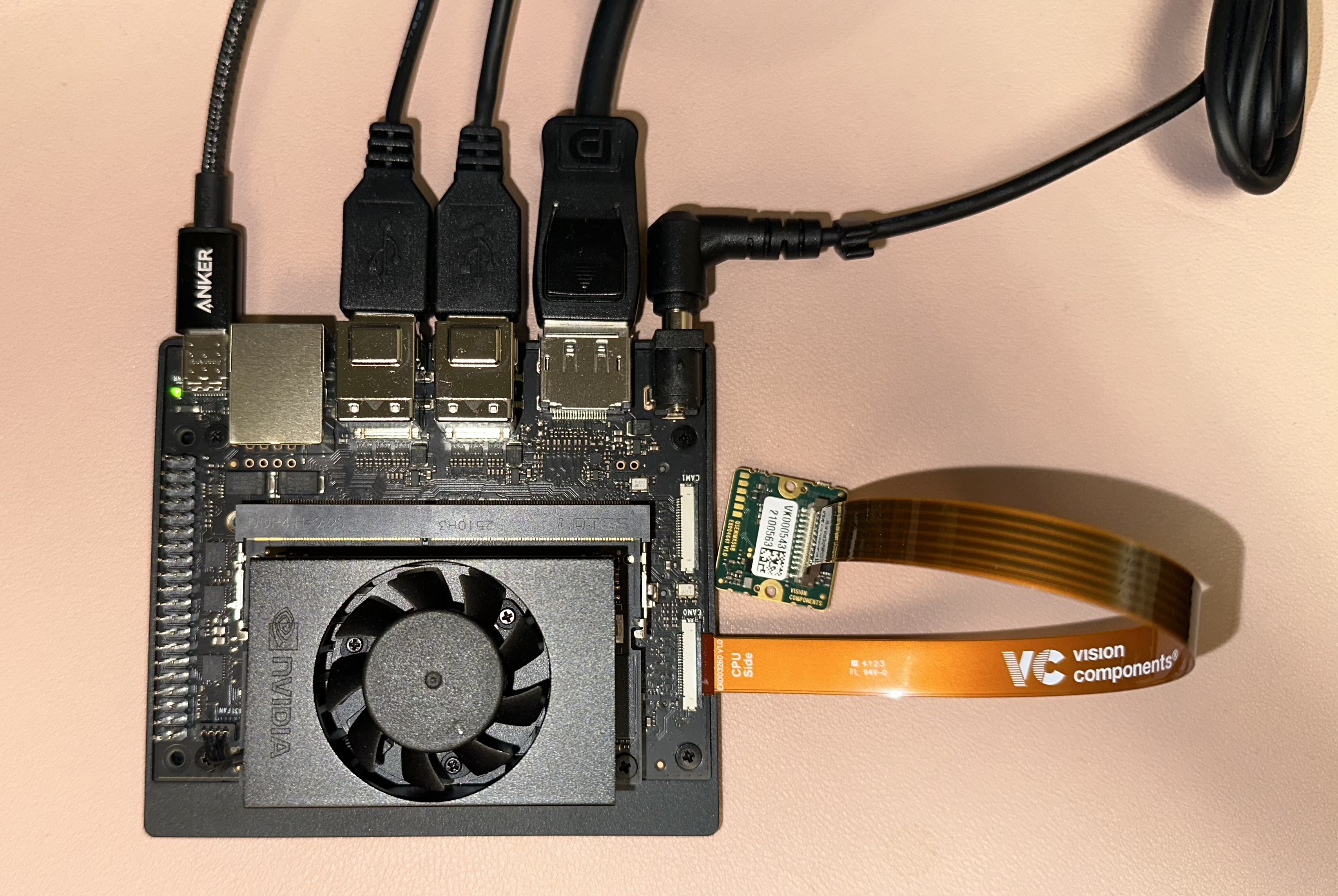
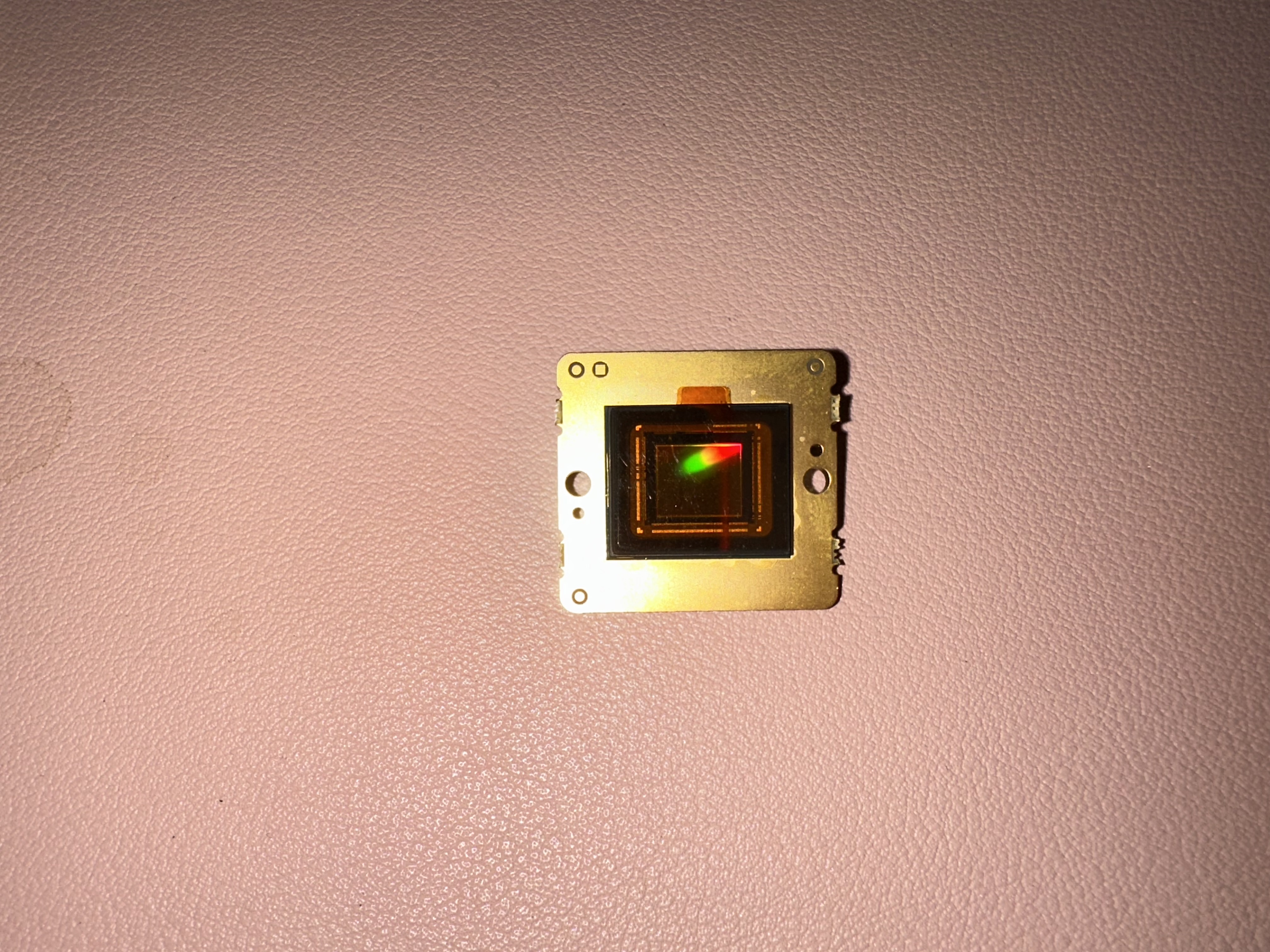
Ye Zhang’s October 2025 setup report documents initial camera streaming and ROI experiments. My subsequent work developed the operator GUI and acquisition/recording pipeline. The hardware platform and initial setup therefore predate my contribution.
Keeping preview separate from acquisition
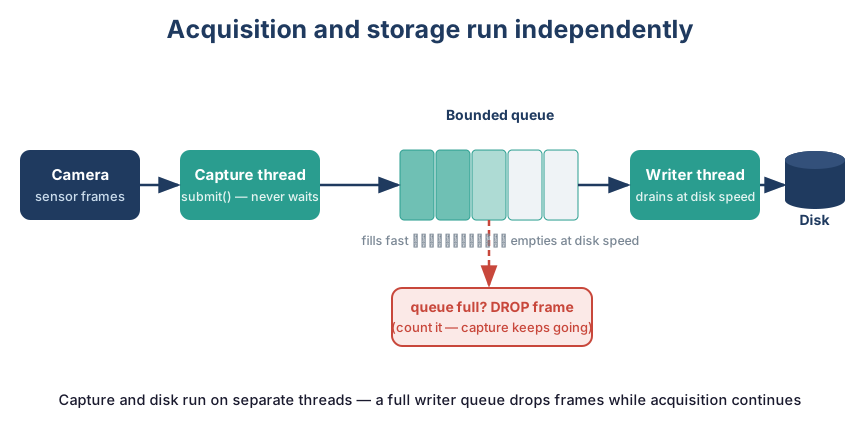
The PySide6 and pyqtgraph interface provides exposure, gain, ROI and binning controls, plus recording and trigger options. Separating acquisition from display prevents preview refresh from setting the capture rate.
Camera controls in one interface
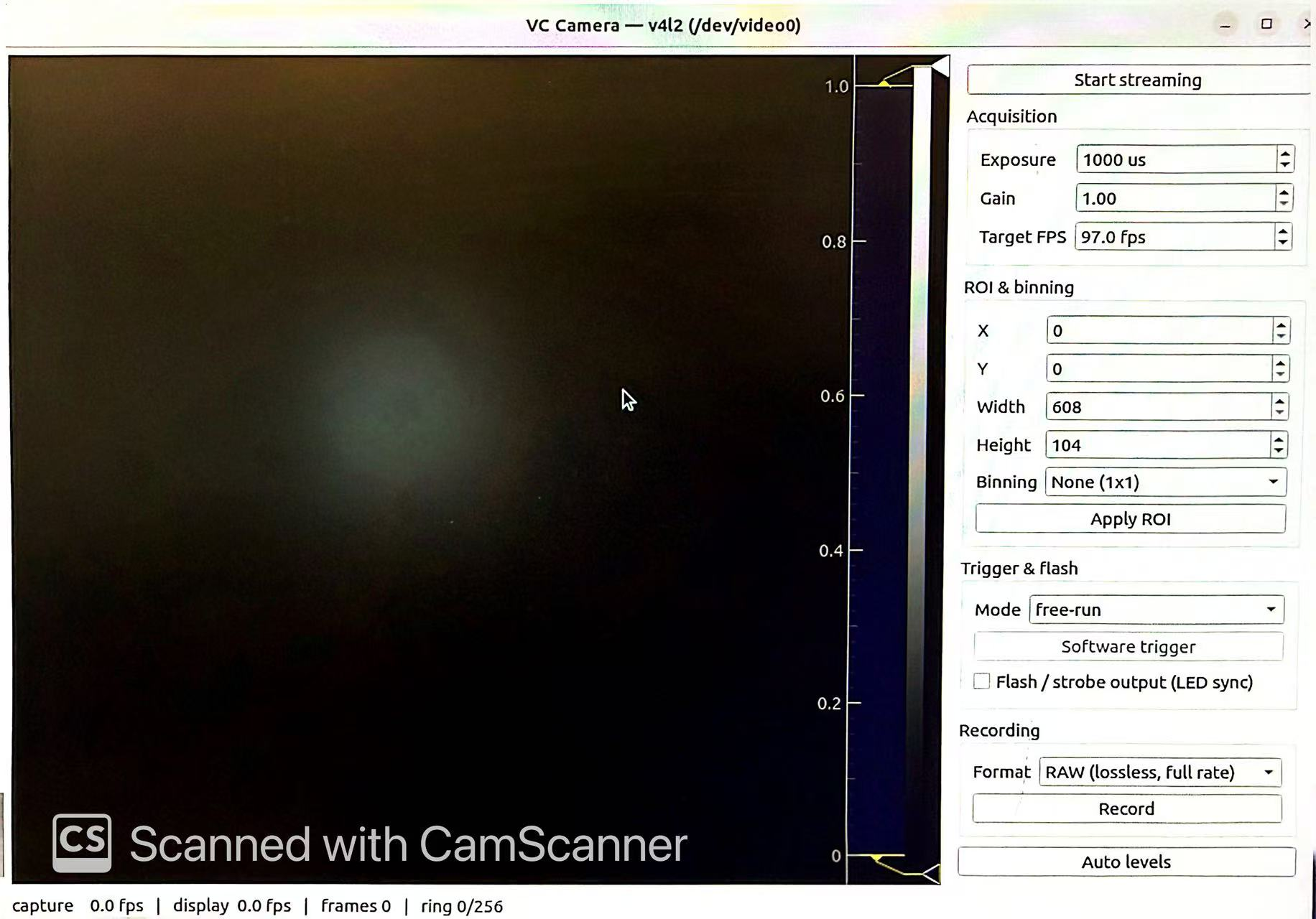
The interface separates requested camera rate, live display rate, and recording counters. A 608 × 104 ROI appears in the documented setup; the original capture metadata is still needed to associate an exact configuration with the reported maximum rate.
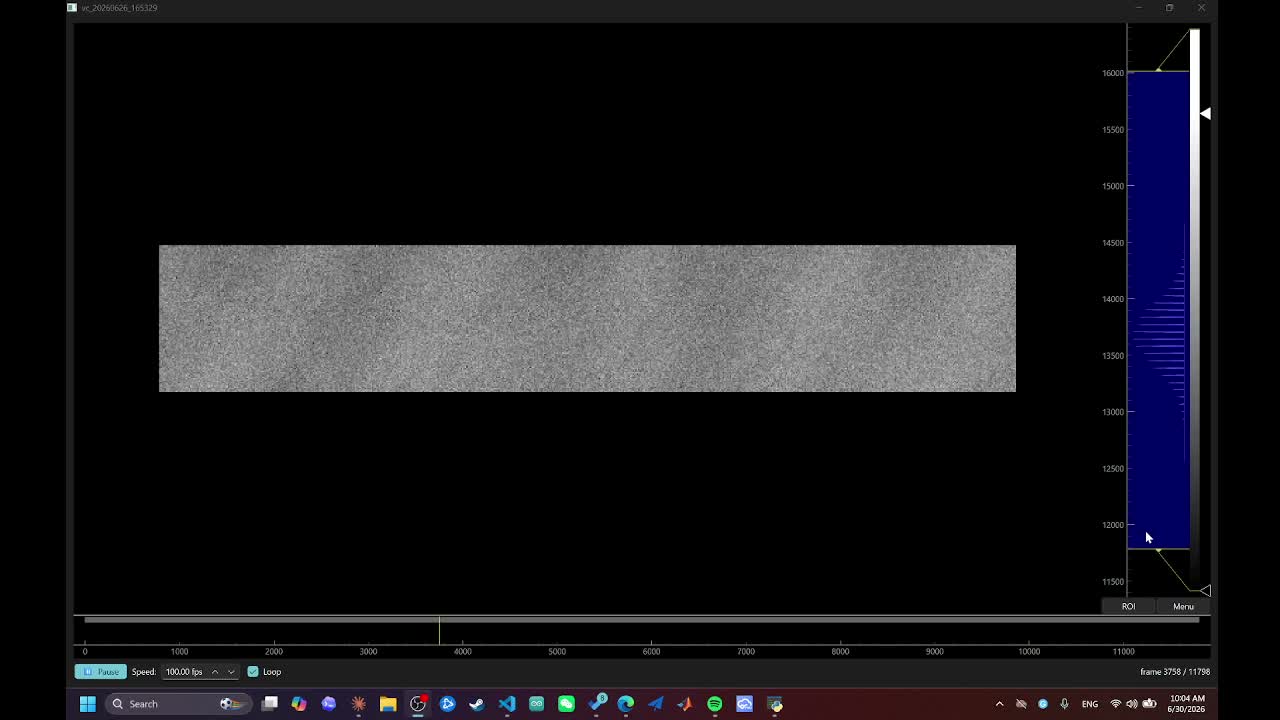
Recorded-data playback
Reported acquisition rate
The project reports approximately 770 fps with a reduced region of interest. Reducing the readout area trades field of view for speed.
The original capture and timing metadata are still needed to verify the exact ROI, duration, frame count, and sustained disk-recording rate. A presentation screen recording shows playback of an acquired dataset, but does not independently establish that throughput.
Recording and controls
Scientific data path
RAW recording preserves frame values with metadata. A separate writer queue allows capture to continue if storage falls behind, while counting dropped frames.
Operator interface
A live image, intensity histogram, frame counters, and acquisition controls provide a usable bridge between the camera hardware and experimental work. MP4 output serves as a preview format.
Project documentation
Hardware background: Ye Zhang, camera setup report, October 15, 2025. Software and interface: Mike Yu, VC Camera Boards GUI and FPS Enhancement, July 2, 2026. The reported acquisition rate is updated to approximately 770 fps based on the project record and September follow-up.